 |
|
|||


 |
|  |











 |
 |  |
|
CASTOR BEAN A FUEL SOURCE FOR THE FUTURE
The castor plant may grow 6 to 15 feet (2-5 meters) in one season with full sunlight, heat and adequate moisture. Its palmately lobed and large leaves may grow up to 20 inches (50 cm) across and resemble a tropical aralia. There are various cultivated varieties with different foliage colorations like black-purplish, dark red-metallic, bronze-green, maroon, bright green with white veins, and just plain green Flowers occur most of the year in dense terminal clusters, with female flowers just above the male flowers. There are no petals and each female flower consists of a little spiny ovary (which develops into the fruit or seed capsule), and a bright red structure with feathers. Each male flower consists of a cluster of many stamens which literally smoke as they shed pollen in a gust of wind Ecological Requirements
Climate Castor is essentially a warm season crop, cultivated in tropical, subtropical and temperate regions. Its cultivation is largely confined to countries lying between 400N and 400S latitudes, but in Russia, a few varieties are grown even up to 520 North latitude In India it is being cultivated up to an attitude of 2500m, but in regions where frosts are common during the crop season; its cultivation is restricted up to 500 m. A frost free growing period of 140-190 days depending on variety is highly essential for obtaining satisfactory yields. It grows in tropical and subtropical regions as a perennial plant and in temperate climate as an annual plant. A moderate temperature of 20-26°C is highly favorable during crop period for obtaining higher yields. A low temperature (less than 15°C) in the seed bed prolongs the emergence of seedlings, and makes the seed more liable to attack by fungal diseases and insects. Castor, being a deep rooted crop, is fairly resistant to drought. A well distributed rainfall of 500-600 mm, during growing period will yield reasonably good yields. Castor can with stand long dry spells as well as heavy rains but is highly susceptible to water logged conditions Soil Castor crop can be grown on a wide range of soils, provided they are fairly deep and well drained. Heavy clays, with poor drainage, and marhsy soils are unsuitable. The highly suitable soils for castor are deep, moderately fertile, with slightly acidic conditions (pH 5.0 to 6.5), well drained, sandy loams. Excessively fertile soils are not desirable, as they favor excessive vegetative growth at the expense of seed yield. Castor does well in the soil which is not fit for valuable commercial and food crops. Though castor can tolerate a pH of 8.0 but at this pH, the soil structure and soil physical properties will become the important limiting factors for castor cultivation. Agronomy CASTOR CULTIVATION TECHNOLOGY
The key factors that can influence the oil yield of Castor Plant are: Climate ABC carefully manages Castor Plant cultivation, with advanced crop practices suitable to local soil, weather, pest, and disease conditions to ensure the high amount of oil as we have developed enhanced technology with regards to:- Planting materials & other inputs The key factors governing profitability of large scale production are: Selection of high yielding varieties with suitable marketable quality,Sowing in a proper season, in compliance with the latest agro techniques. Pest control Management of companion crops Adoption of post harvest management Enhanced And Improved Cultivar: Castor Bean Crop Information Growing & Care Instruction Manual and Monitoring & management system The planting, looking after and harvesting plants is an important factor and it requires a lot of knowledge, skill and techniques viz: the best planting season to make the plant early matured, then an amount of seeds to be planted, an irrigation & fertilization method, a control method of weeds , investigate quality, yield, and degree of occurrence of several troubles . As all biological organisms require care and attention, the need to draw Growing Instructions was being felt by all concerned Therefore keeping in view Various concerns and problems of a new Grower; ABC being The Centre of Excellence has designed Castor Growing & Care Instructions Manual with Monitoring & Management System Diary on the basis of our own tried, tested, developed and experienced Cultivation Technologies and Practices to help you grow a Failsafe Castor Fuel Farm The Castor Bean Growing & Care Instructions manual provides basic guidance for the project developers to help ensure successful Castor Bean planting projects. Proper planning, planting and maintenance are the key for growing flourishing plants. Simply putting a plant in the ground is not enough. Careful thought must be given to the purpose of the planting, location of the planting and how the Castor Bean will be cared for once they are in the ground. A properly planted and maintained plant will grow faster and live longer than one that is incorrectly planted. This booklet is organized as a step-by-step checklist of fundamentals to help you with your Castor Bean planting project We have sincerely tried to put all steps in nutshell and hope it will be a useful tool in growing your Biodiesel Plantation Both the Castor Bean publications are available can be ordered just for US$ 99.30. PAYMENT BY WIRE TRANSFER/PAYPAL /Western union Money transfer For payment by PAYPAL add 3.4%+0.30$An Economic Evaluation of Castor Farming The seeds from the Ricinus communis Plant contain in excess of 45% oil. Castor seed oil is being used widely for various purposes. It is used as a lubricant in high-speed engines and aero planes, in the manufacture of soaps, transparent paper, printing-inks, varnishes, linoleum and plasticizers. It is also used for medicinal and lighting purposes. The cake is used as manure and plant stalks as fuel or as thatching material or for preparing paper-pulp. In the silk-producing areas, leaves are fed to the silkworms. Now the main use of the oil will be as bio fuel and for the production of biodiesel. This oil has an ash content of about 0.02% the percentage for sulfur is less than 0.04% .The higher the cetane number (CN), the better the fuel will be when used as a diesel. The CN of the majority of biodiesel fuels is actually higher than petrol or diesel, and the cetane number of castor oil biodiesel is in a good range for diesel engines. The castor biodiesel has very interesting properties (very low cloud and pour points) that show that this fuel is very suitable for using in extreme winter temperatures... The Plants will act as sinks for carbon dioxide as Castor bean plants capture around 10 tons of carbon dioxide for every hectare (2.471 acres) planted and, hence, the Ricinus communis plantation will reduce the amount of this greenhouse gas (GHG) in the atmosphere. The project has many other positive economic, social and environmental impacts: There are income generation opportunities that result from the project like the provision of goods and services to the plantation and its workers
CASTOR BIODIESEL BUSINESS PLAN: ABCs Professional Business Plan Service A feasibility study and a business plan are essential steps in developing a successful biodiesel business. However it is not easy to prepare an excellent business plan. Advanced Biofuel Center (abc) has been working in the field of nonfood oil crops promotion for biodiesel production and become a pioneer of Biodiesel nut Plantation &Production. ABCs research findings and on-hand field experiences in respect of various technical, agronomical/silvicultural aspects of plantations of Jatropha and other nonfood biodiesel crops in various categories of land as well under different plantation models have resulted in significant improvements in knowledge and technical background related to Productivity, profitability and sustainability of commercial production of nonfood biodiesel Crops. Based on our proprietary knowledge and extensive experience gained we have developed Based on our proprietary knowledge and extensive experience gained we have developed and enhanced a wide range of Products for creating a FALESAFE FUEL FARM With its extensive experiences in the field, enhanced technology, plant science & professional knowledge, effective consulting service and business intelligence ABC can clearly understand the business model, products and services, production, marketing and provides all aspects of feasibility analysis and business development including assessments of the following: crop production, crushing, co-product markets, feedstock acquisition and contracting, technology analysis, risk analysis specific to biodiesel technology, feedstock, markets, and general project risks, market and financial analysis. We make the integration of our experience and professional knowledge with your information. We provide in depth analysis of crop cultivation and crop care part of plan for which we have team of agronomist and plant scientists, and then we have engineers and experts in biodiesel industries to finish the technology and production part of business plan. We have professionals in accounting to complete financial and economics part. ABC can offer the type of consulting that only numerous years of leadership in the biodiesel market can provide at an affordable price. ABC can help clients identify the needs, opportunities and solutions of their local, regional and national markets. By identifying these needs and providing management direction, ABC can help in creating a perfect business plan in order to develop and manage an effective and successful biodiesel facility. The most critical component of any business plan is the pro forma, an educated view or projection of what the performance of a company is capable of, given a specific set of assumptions and conditions. ABC has been involved in identifying these needs for specific projects for a number of years and can help develop a realistic and obtainable: Income Statement Balance Sheet Capital Budget Cash Flow Break-even Analysis Sensitivity Analysis Assumptions Governing the Projections
These projections will be valuable in determining feasibility of the project, securing financing, attracting investment and guiding management so that the company can reach its full potential. For a detailed quote for a complete and comprehensive Castor Biodiesel Business Plan from Farming to fuel, kindly mail to jatrophaplan@gmail.com or contact 0n +91 0929423333
Castor Energy Project Services (CEP) Based on our proprietary knowledge and extensive experience gained we have developed and enhanced a wide range of Products just to ensure FAILSAFE FUEL FARM ABC has developed a set of CEP services with access to our own supply chain intellectual property rights (IPR) and exclusive expertise with technological background and experiences in the field for creation of your ambitious Green Energy Farm CEP SERVICE 1: (preliminary stage) CEP SERVICE 2: (preparatory stage) CEP SERVICE 3: (pre-plantation stage) CEP SERVICE 4: (Plantation stage) That's why ABC is providing low-cost Crop Cultivation Technology & Crop Care Technology which includes Improved Agricultural Practices Varietal Improvements Enhanced cultural practices Pest & Disease Control Intercropping Going Green with the use of Microbial fertilizers Fine-tuning practices to soil type, environmental conditions & labor For further details, kindly contact:
|
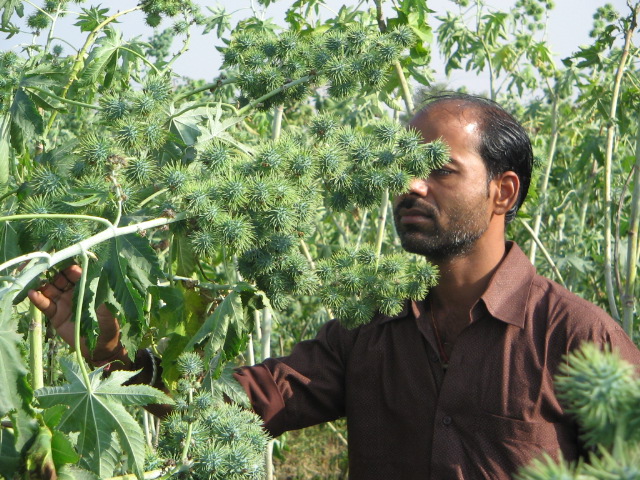 ABC is dedicated to the development of oil seed bearing trees [OSBT] - non-food multiple vegetable oil plantation and technologies in order to reduce Dependence on fossil fuels, bring greater control and security of fuel supply and reduce dangerous climate changing emissions, including CO2. ABCs Jatropha and other non-food oil crop plantation program. With an effort to grow beyond oil, apart from Jatropha, ABC has identified, developed and cultivated as many as 15 oil seed bearing trees [OSBT] and non-food oil crops. With years of continuing research, experiments and trials has provided an adage to find and develop 2nd generation biodiesel feedstock with low cost input technology. In the search for more environmentally friendly fuels, the use of castor oil as Biodiesel has proven to have technical and ecological benefits, and stands as an opportunity for agricultural development in arid and impoverished areas throughout the tropics and sub tropics globally.
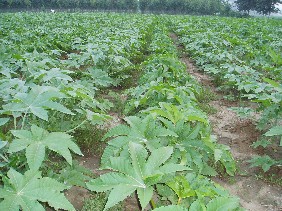 ABC has completed a series of Experiments and research on growing Castor Bean (ricinus communis) in conjunct with Jatropha in arid and semi arid regions and results an only viable solution for turning marginal lands into viable economic lands.
 BOTANY
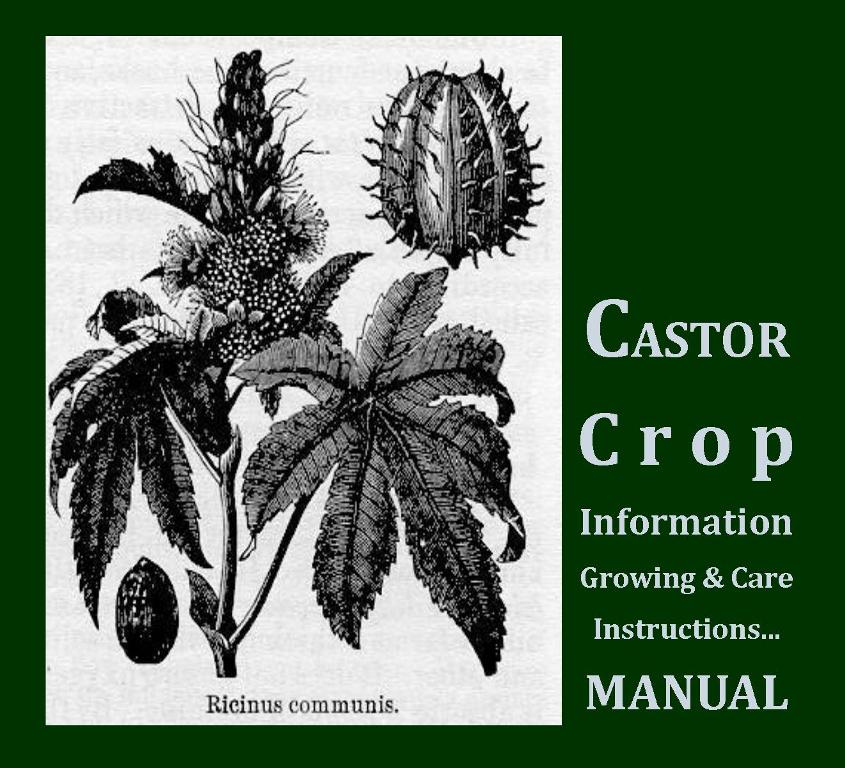 The Castor Plant is native to Africa and India but has naturalized across tropical and subtropical regions. The plant has incredible industrial value, low demand for water and prolific growth. As the seeds do not form a staple food source, the food for the people or food for fuel issue is argued to be not relevant. Also, the plant is able to grow in marginal lands. The productive plantation of Castor Plant needs to be scientifically managed for better growth and production. The growth and yield of the plant could be improved through effective management practices. The enhanced cultivation technology and improved inputs developed by ABC may provide about 5-7 k liters of biodiesel in conjunction with couple crop agriculture without displacing food crop and without utilizing prime food land in terms of sustainable farming techniques
© 2004- 2025 ABC-Advanced Biofuel center ,, All Rights Reserved |